


Week of July 7, 2025 Local, professional reports straight from the field,
from all regions serviced by Ag Partners.
Meet this week’s featured agronomists:

Le Sueur, MN

Goodhue, MN

Lewiston, MN

Ellsworth, WI
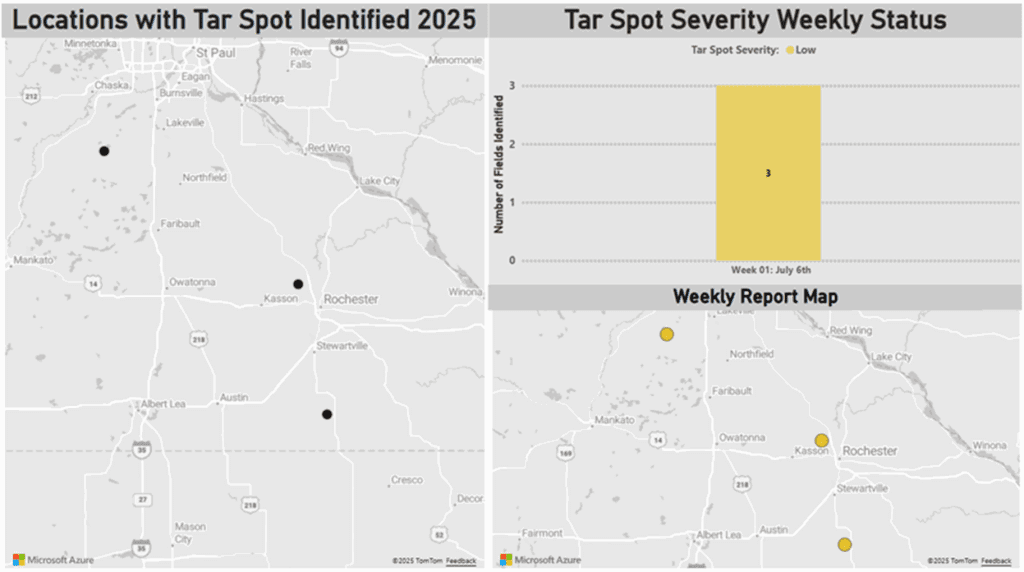
Ag Partners Tar Spot Tracker
Check here for your weekly update on where Tar Spot has been reported in the Ag Partners territory:
WEST
Belle Plaine – Le Center – Le Sueur – Morristown – Traverse
Out West, we are wrapping up with side-dressing/top-dressing and some resprays on weeds. Summer is flying by, and it is now time to start thinking about your fungicide applications. Fungicides play a crucial role in protecting crops from a variety of fungal diseases that can significantly reduce yield and crop quality. Diseases like Gray Leaf Spot, Northern Corn Leaf Blight, and especially Tar Spot can spread quickly under the right conditions, damaging leaf tissue and limiting the potential yield. Applying fungicide at the right time, typically around the VT (tasseling) – R1 (silking) stage can help prevent or limit the spread of these diseases. It is important to monitor weather conditions, disease pressure, and hybrid susceptibility to determine the best time for application.
Pictured below is a trial from 2024, comparing fungicide applications in a field where there was high disease pressure on a hybrid that was rated below average on Tar Spot.
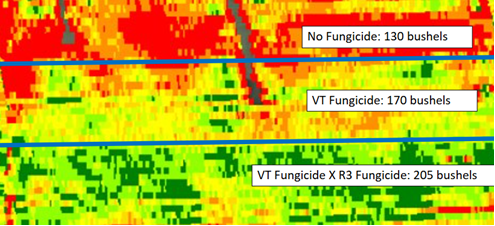
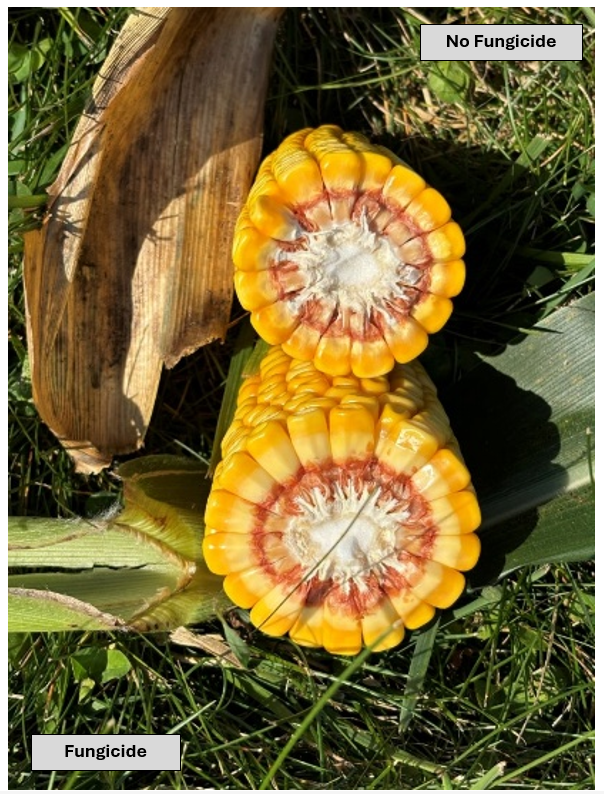
Not only does fungicide help prevent and stop the spread disease, but it will also helps ensure plant health. Even in the absence of disease, fungicide applications are proven to be beneficial to protecting yield and increasing your ROI. Fungicide assists with pollination, stalk integrity, water efficiency, and improves grain quality.
As the season continues to progress, contact with your Ag Partners Agronomist or AYS Specialist to learn more about the specific hybrids planted out in your fields Response to Fungicide scores and to schedule your applications. Have a wonderful July! – Kati
EAST
Goodhue – Kenyon – Lake City – Pine Island – Wanamingo
Every year this week, I have a couple fields close to Goodhue I always go take a look at. I always ask myself the same question, “Is the crop at a normal stage for the first full week in July?”. They are never the first planted, always planted when conditions look favorable, and consistent timing with most of the area for a planting window – which I feel are all good baseline indicators when asking myself this question.
The corn on July 4th has an average of belt high height, 36”. This doesn’t seem far off since the Roundup label says 30” maximum height and we always struggle the last few days of June to get those straggler fields sprayed. This year the corn is chest high in my sentinel field, around 50”. Some years, Agronomy Manager Dan Stamschror and I would have a little contest to find a July 4th tassel. It isn’t that tall yet.
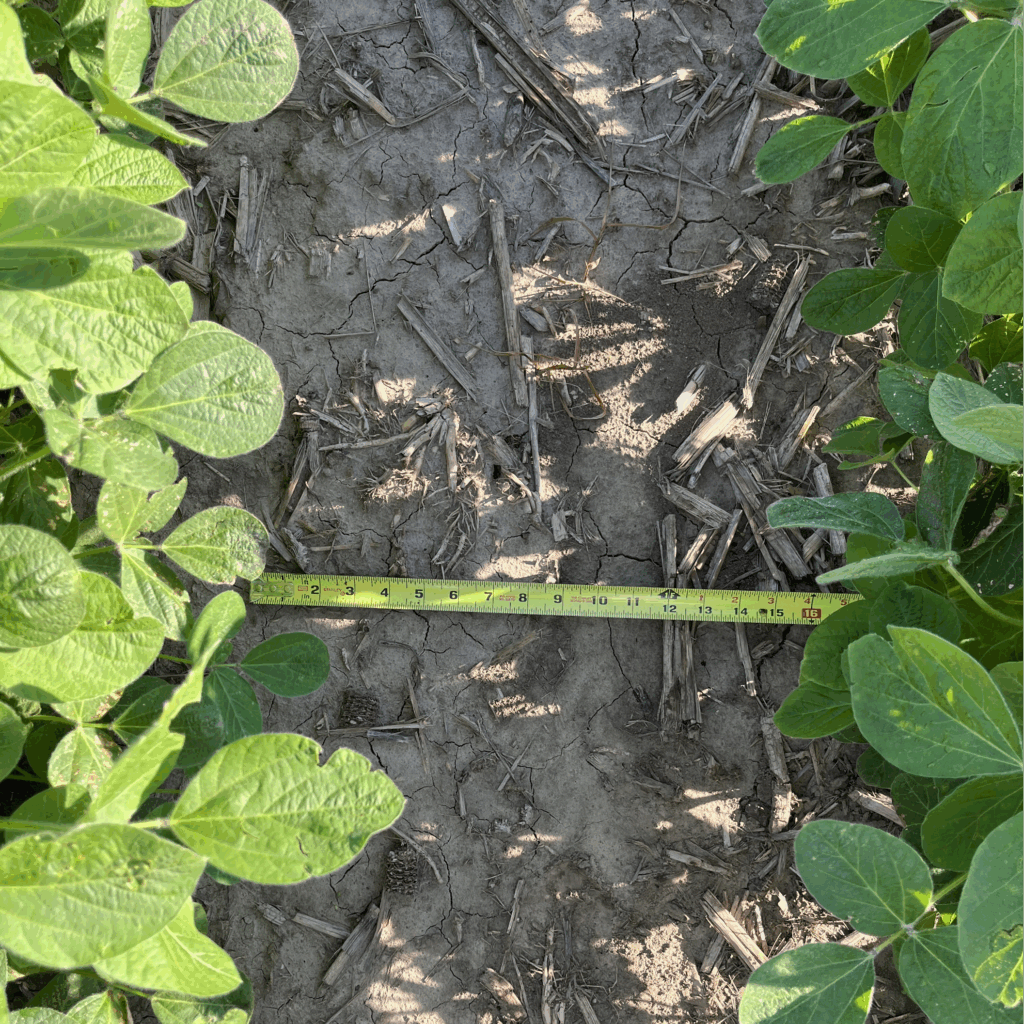
When it comes to the soybeans on July 4th, I like to see the row ½ shaded on a 30” row. Even though the beans seem short and behind, my field looks to be where I want it. There are years when we had to spray aphids early, like July 15th, and the beans seemed short. However, by August 7th when finishing up fungicide spraying on beans, then those beans were tall an lush.
All said, the crop looks very even in height, color, and on track for optimal yield. The farmer will decide the kernel depth, pod count, stress mitigation, and plant health of the crop at harvest by what practices they choose to invest in. Mother Nature has done her part. Our team has tested and done the work to provide the Ag Partners customer with proven fungicides, insecticides, foliar and biological plant needs. Reach out to any one of our agronomists with questions or follow through on your current strategy. – Chris
SOUTH
Elgin – Lewiston – Stewartville
One recurring question I have been getting is, “How are we sitting on GDU’s?” The answer is good! The southern geography is slightly ahead of the average. This is exciting because it is accelerating the crops development in what was a later planting year compared to the last few. To the right is a GDU summary from Rochester.
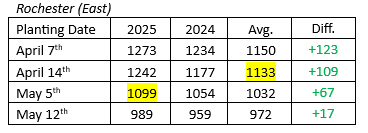
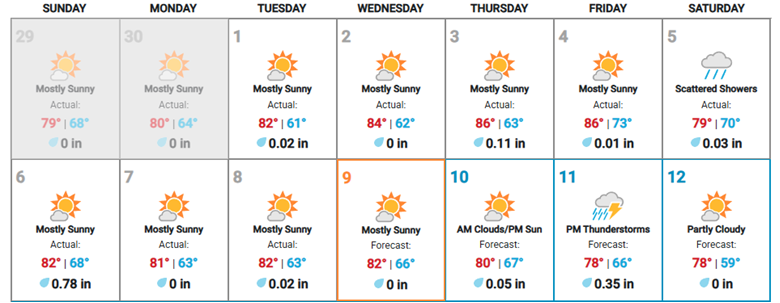
Assuming we continue to receive adequate moisture, more heat means more photosynthesis and improved kernel development. There is a caveat to that. Continuous EXTREMELY hot weather during pollination can hinder pollen shed. The lower nighttime temperatures are favorable for a strong pollination window. Below are the highs and lows from 9/29-7/12 from the Rochester Airport.
I think there is a nice crop across the geography, so let’s get this fungicide put on and get ready for fall! – Tye
WISCONSIN
Ellsworth
Corn and soybeans in WI are progressing ahead of average, thanks to warm, moist conditions, which has created a headache putting up dry hay and created an environment conducive to disease pressure. Crop health is rated mostly good, but vigilance is key—especially for tar spot, white mold, Japanese beetles, and sap‑feeding insects. Scout consistently and manage fungicide timing. – Brady
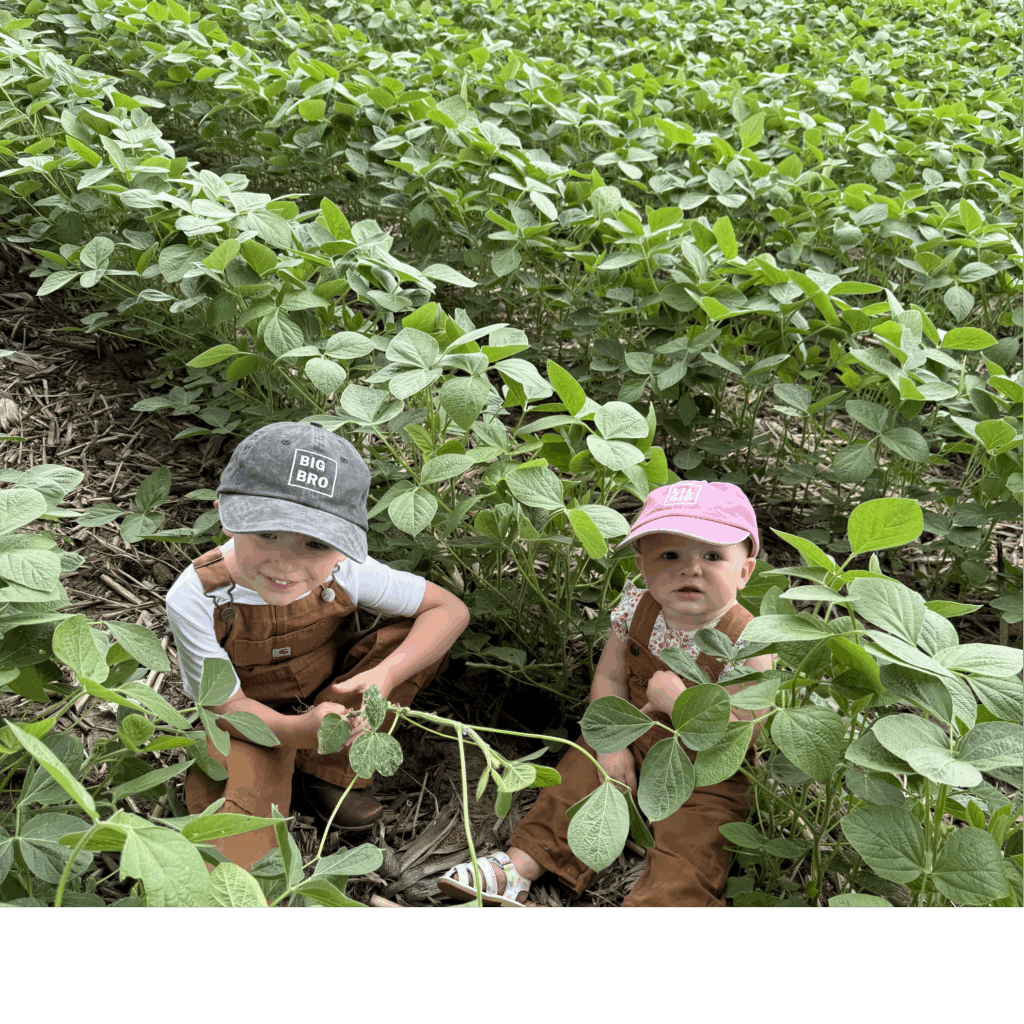
<< It is all work and no play when these Crop Scouts show up on the farm!