

Week of May 11, 2026 Local, professional reports straight from the field,
from all regions serviced by Ag Partners.
Meet this week’s featured Agronomists & AYS Specialists:

Morristown, MN

Goodhue, MN

Stewartville, MN

New Richmond, WI
MINNESOTA – WEST
Belle Plaine – Le Center – Le Sueur – Morristown – Traverse
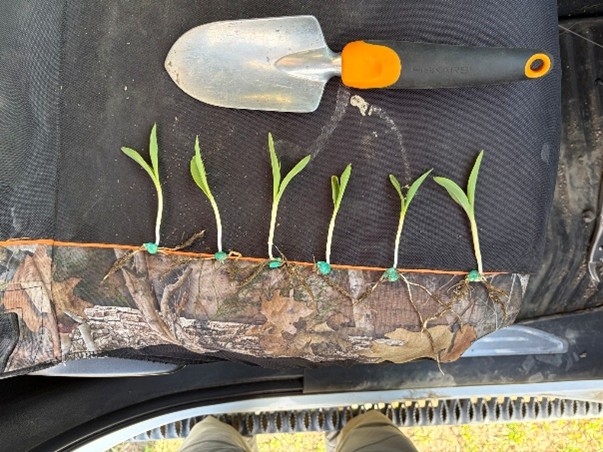
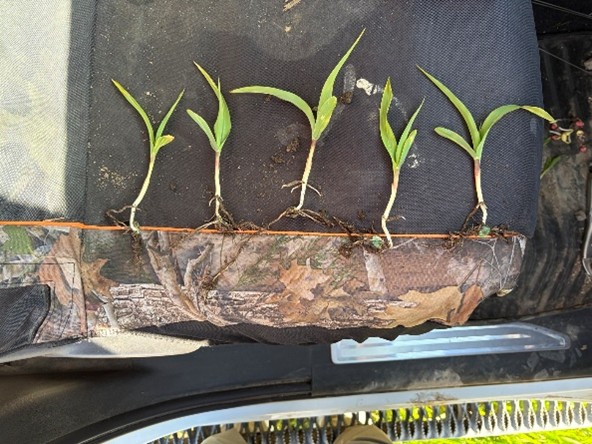
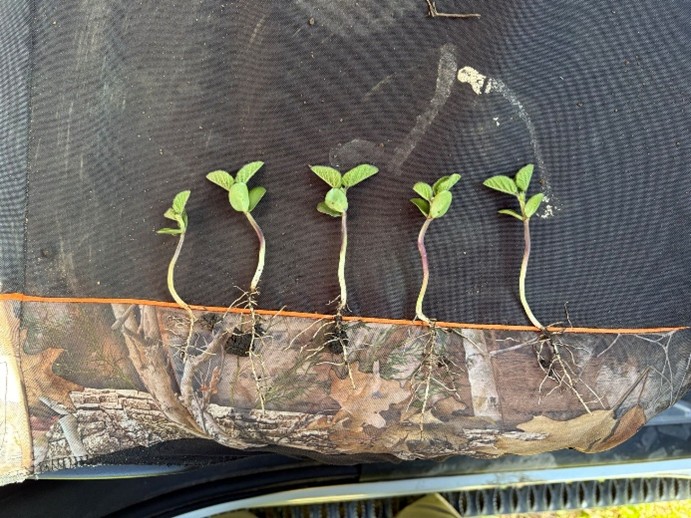
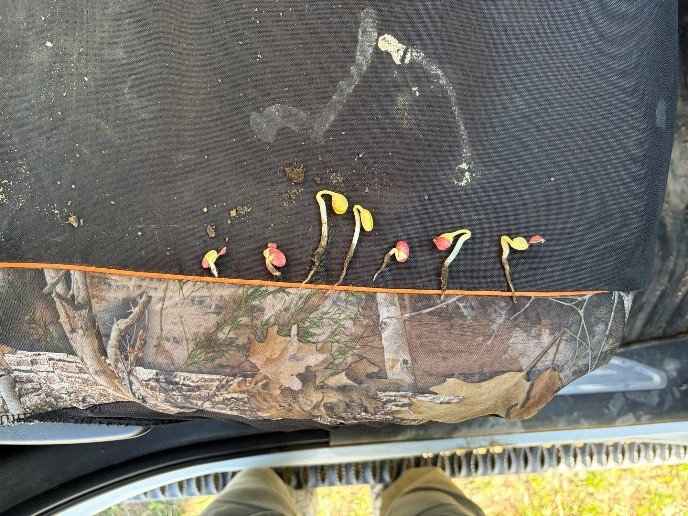
Planting is coming to an end and pre-emerge on both corn and soybeans are wrapping up in our area. The next thing we need to focus on are stand counts and weeds. With the drier and cooler conditions, we may see some uneven emergence on both the early planted corn and soybeans. Now is the time we want to be out scouting, to consider any possibilities of replant. The second thing to be on the lookout for is weed pressure. We really want to pay attention to areas that have historically been an issue. Other places to watch are old hay fields that were ripped up and planted into. These places may require more of a burndown approach to get a handle on them. As always reach out to your local Ag Partners Agronomist with questions. Have a great week! – Brady
Below are some pictures of uneven emergence on soybeans and corn.
MINNESOTA – EAST
Goodhue – Kenyon – Lake City – Pine Island – Wanamingo
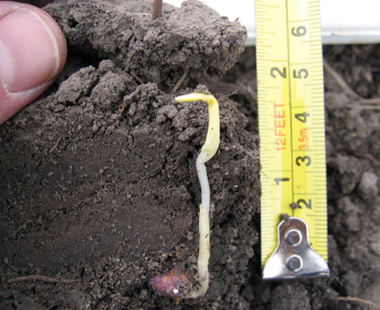
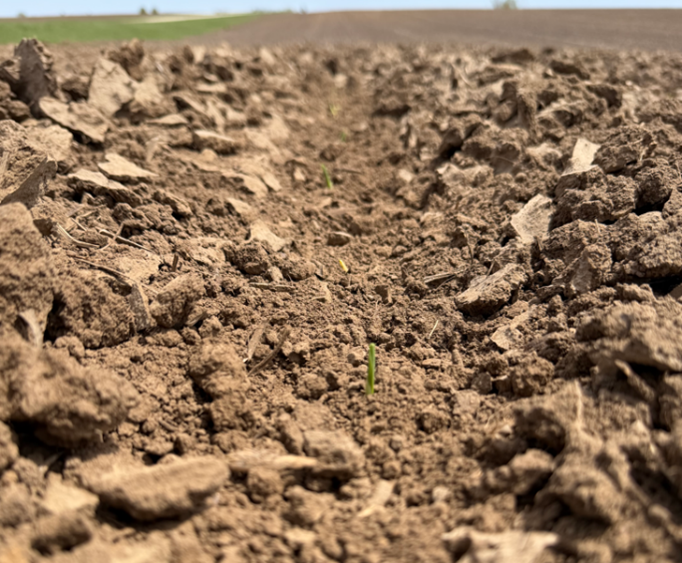
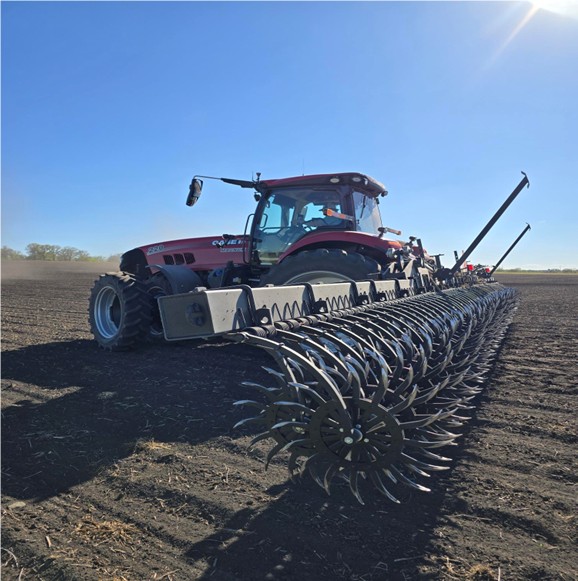
The early plantings of April 21,22,23 are finally emerging this week, but there are some plants that are starting to leaf out underground. If you’re questioning whether you should rotary hoe or not after looking at the field, you already have your answer. Dig the rotary hoe out of the shed and make a couple passes and see what it looks like. You can generally expect 1-2% damage from using a rotary hoe, but if you have plants leafing out underground, you will gain that back and more very quickly. -Todd
MINNESOTA – SOUTH
Elgin – Lewiston – Stewartville
Delayed/Uneven Emergence and Crusting
This week’s questions have revolved around “Why is my stand emerging so uneven?” and “Do I have crusting issues?”.
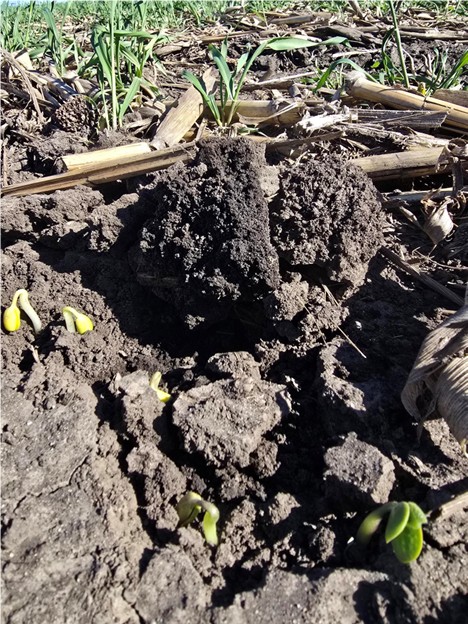
It appears the two are going hand-in-hand in some cases. Some fields planted between April 24-26 have developed a crust and in some cases, a very hard crust in both corn and soybean fields. No-till fields seem to be worse than tilled fields in our area. Rotary hoeing has helped in some cases, but others will likely need to be replanted. If you need help assessing a field for stand and/or crusting issues, please reach out and we would be glad to help. Below is a field with pretty bad crusting issues. This field will likely need to be replanted.
Crusting is not the only problem I am seeing out there. Shallow planting depth, open planting furrow, and sidewall smearing are all more common than what I have seen in a few years. Clay knolls have been especially problematic. These can, and probably will, cause some issues later on this season.
We still have plenty of time to replant if you need to. Assess final populations and stand health to determine if replants could be the action needed. A rotary hoe can be a friend or foe but don’t expect it to produce miracles! – Pete
WESTERN WISCONSIN
Durand – Ellsworth – New Richmond – Osseo
Wisconsin has finally warmed up, bringing favorable conditions and allowing planters to roll across the region. Soybeans will begin emerging soon, and with the short window between planting and emergence, timing is critical. Be sure to stay in close contact with your agronomist to get on the spray schedule. A strong pre-emerge program plays an important role in suppressing early weed pressure and reducing stress on young plants, helping set the foundation for a successful crop.
Corn planting is progressing quickly, with approximately 50% of the crop planted across our area. We are also about 85% complete with preplant fertilizer applications. With these favorable conditions, corn should emerge rapidly and stand counts will begin soon. Now is the time to plan for corn pre-emerge and early post-emerge applications to stay ahead of weed pressure and support strong crop development.
Alfalfa stands are currently showing signs of stress, with uneven growth due to earlier cold conditions. However, stands should begin to even out after first cutting. After first cutting, products such as fungicide, Ascend SL and foliar nutrients can be applied at 4-6” of regrowth. This approach can help prevent disease, promote plant health, and improve both yield and feed quality for the subsequent cutting.
Lastly, a sincere thank you to all applicators and operations team members for their dedication this season. Despite challenging conditions, including rain and strong winds, you have put in the hours to keep everything on schedule. Your hard work is greatly appreciated. Stay safe and have a great week. – Marcus