Week of August 4, 2025 Local, professional reports straight from the field,
from all regions serviced by Ag Partners.
Meet this week’s featured agronomists:

Le Sueur, MN

Wanamingo, MN

Elgin, MN

Ellsworth, WI
Our Agronomy Team will be taking a short break from the Weekly Agronomy Updates, as we take in the final days of summer and start to prepare for harvest. We will see you back here in September!
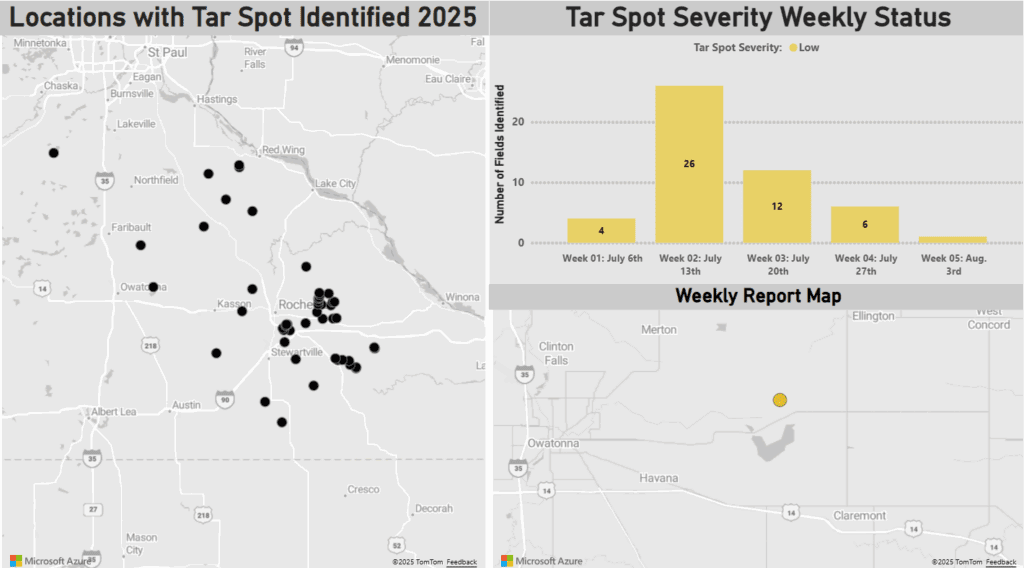
Ag Partners Tar Spot Tracker
Check here for your weekly update on where Tar Spot has been reported in the Ag Partners territory:
WEST
Belle Plaine – Le Center – Le Sueur – Morristown – Traverse
Here in Le Sueur, the crops look excellent this summer. We are finally winding down with fungicide applications. Any and all means were used to apply it: helicopters, airplanes, good old ground rigs, and even drones. While the incidence of Tar Spot and other diseases have been minimal east of Highway 35, there is still significant benefit to applying fungicide to protect yield—especially this year, when the potential is the highest it has been in a few years.
On the soybean side, aphid numbers are generally low. However, they are present, so it’s important to keep scouting until the pods are fully filled or the R6 growth stage. If you have questions or need more information, don’t hesitate to reach out to your local Ag Partners Agronomist. Enjoy the rest of the summer and stay safe out there! – Jake
EAST
Goodhue – Kenyon – Lake City – Pine Island – Wanamingo
Is the end in sight? Yes, we are closing in on the management decisions for our 2025 crop. In the area we will be wrapping up with fungicide and insecticide spraying over the next week or so. Overall crops look tremendous. Although the crop isn’t in the bin yet, I am very eager to see this fall which management decisions have pushed our crop to the next level, and maybe even a level we’ve never seen before? Yet to come.
There are many in-season management decisions that will be evaluated with harvest data, but until we receive that data, let’s reflect/evaluate decisions we’ve seen the results to already. One I’d like to touch on is the use of Liberty on soybeans. With the increasing pressure and building resistance to waterhemp, we need to make sure we are checking as many boxes as possible when trying to kill it with Liberty. Those key factors are:
- 150 points of heat & humidity (ex: 85 degrees, 65% humidity)
- Sunny day
- 20 gal/acre spray volume
- 43 oz (full rate)
- 1.5-3lbs/acre AMS
- Use MSO and NIS
- Use nozzle that creates medium-fine spray droplets
Target weeds when they are small (less than 3″)
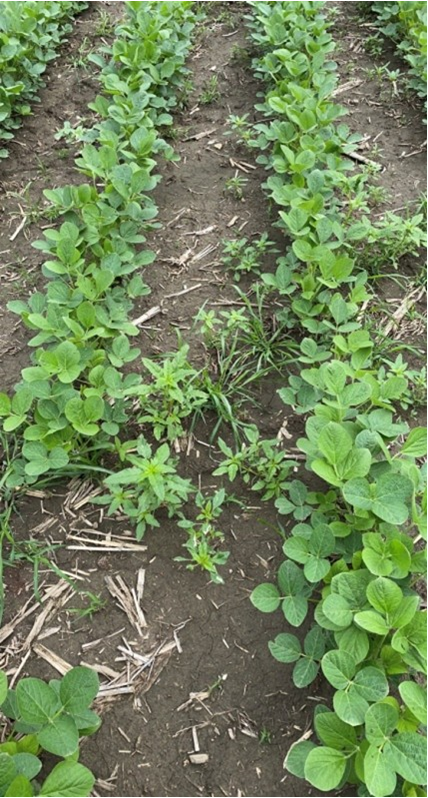
Resprayed
X Not 150 points of heat and humidity
X Not Sunny
X Not full rate
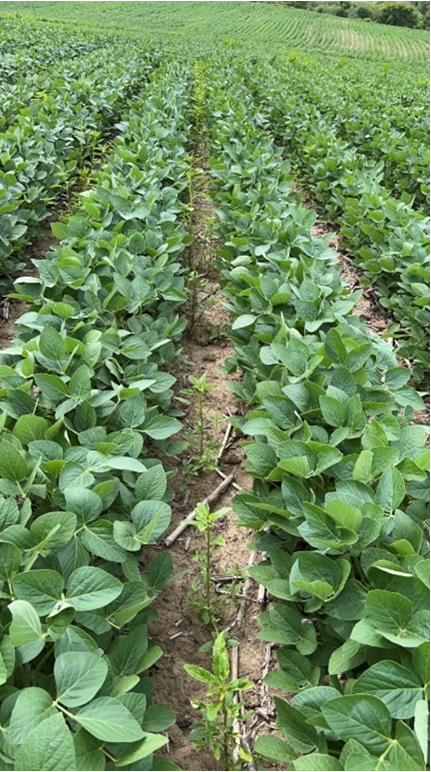
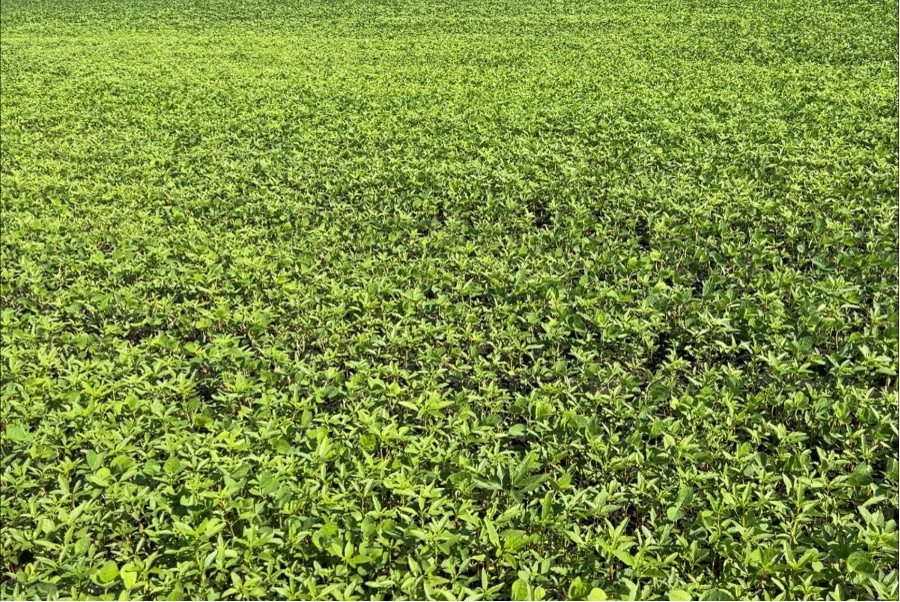
Still Clean
All boxes were checked when application was made.
Have a great rest of your summer! -Zach
SOUTH
Elgin – Lewiston – Stewartville
August has arrived and most of the corn and soybean crop look very good and show high yield potential. Fungicide applications are finishing up and soon, a lot the management decisions for this year’s crop will be coming to an end. Now we want to see good rainfall and abundant warmth for the rest of August to push the crops to maturity.
During scouting for fungicide application timings, it’s become very clear that late season weed control seems to be struggling in many corn and soybeans fields. Tall Waterhemp seems to be the most prominent late season weed escape but is also happening with Giant Ragweed too. Most of the fields having weed control issues are using well laid out herbicide programs – including multiple passes and using more than one mode of action too.
Last week, Eric Soley had an agronomic update focusing on the challenges of controlling Waterhemp this year and discussed some weed control management strategies. Moving forward, I believe we’re all going to need to modify our herbicide programs to stay ahead of this aggressive weed.
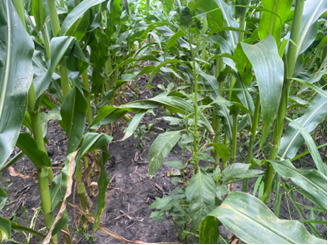
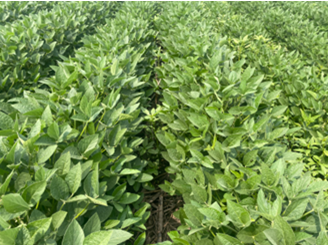
This Fall, keep an eye out when running the combine to evaluate how your season-long weed control program performed and talk with your Ag Partners Agronomist about any concerns you have. – Gary
WISCONSIN
Ellsworth
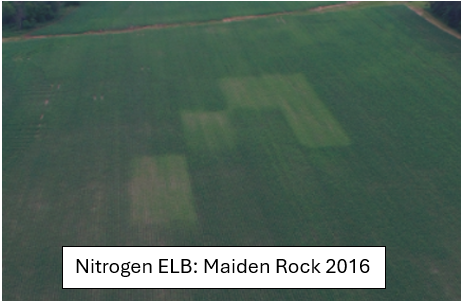
This week I was able to attend a meeting in Iowa for Premier Crop, which is the parent company for our AYS Program. In that meeting we listened to Dr. Mike Castellano, who is with Iowa State and works with the Iowa Nitrogen Initiative. We learned that Iowa is dropping out of the MRTN and going with Premier Crop, to utilize the Nitrogen ELB process to score and learn nitrogen in a whole new way from their current procedures.
The MRTN is nitrogen trials from the top 10 Universities and have been used to publish data to not only farmers, but also to the public. They create the standards on how much nitrogen a farmer should apply. The eye-opening part for me was that in the last 10 years the top 10 Universities have done 1500 nitrogen trials (which seems like a lot), but 1500 trials over the last ten years is only 15 trials per university per year. This is the data we have to go off, a one rate standard, based on the crop price. They are missing so many variables that are very important in the current farming economics.

Iowa has now partnered with technology from Premier Crop (Enhanced Learning Blocks) to push out more than 7,500 Nitrogen trials for 2025. This is a 500% increase in just one state, utilizing the same amount of staff. This will help to better understand Nitrogen with variables such as crop yield x crop price, x ph, x K, soil PPM, x P, Soil PPM, x sulfur, x soil type, x planting date, x gdu’s, and even many more layers that effect how nitrogen is being utilized in the plant.
It was a terrific meeting and really made me think how we have already been doing these trials in Western Wisconsin for the last 12 years. Just in Pierce County alone we have over 500 nitrogen trials, over multiple soil types since we started AYS. These economic times we are currently experiencing was what the AYS program was built for. AYS maximizes the utilization of fertilizer over every acre on your farm. -Brady