Week of July 20, 2026 Local, professional reports straight from the field, from all regions serviced by Ag Partners.
Meet this week’s featured Agronomists & AYS Specialists:

Morristown, MN

Lake City, MN

Stewartville, MN

Osseo, WI
Kernel to Kernel with Tanner
B07M67V
BREVANT • 107 day
B07M67V is a new Brevant hybrid launching for the 2026 growing season. It is available only in the Vorceed corn-on-corn trait package and is specifically positioned for continuous corn production.

Seed Lead
Tanner’s Top Takeaways:
→ Highly suitable for early planting conditions and sandier soils
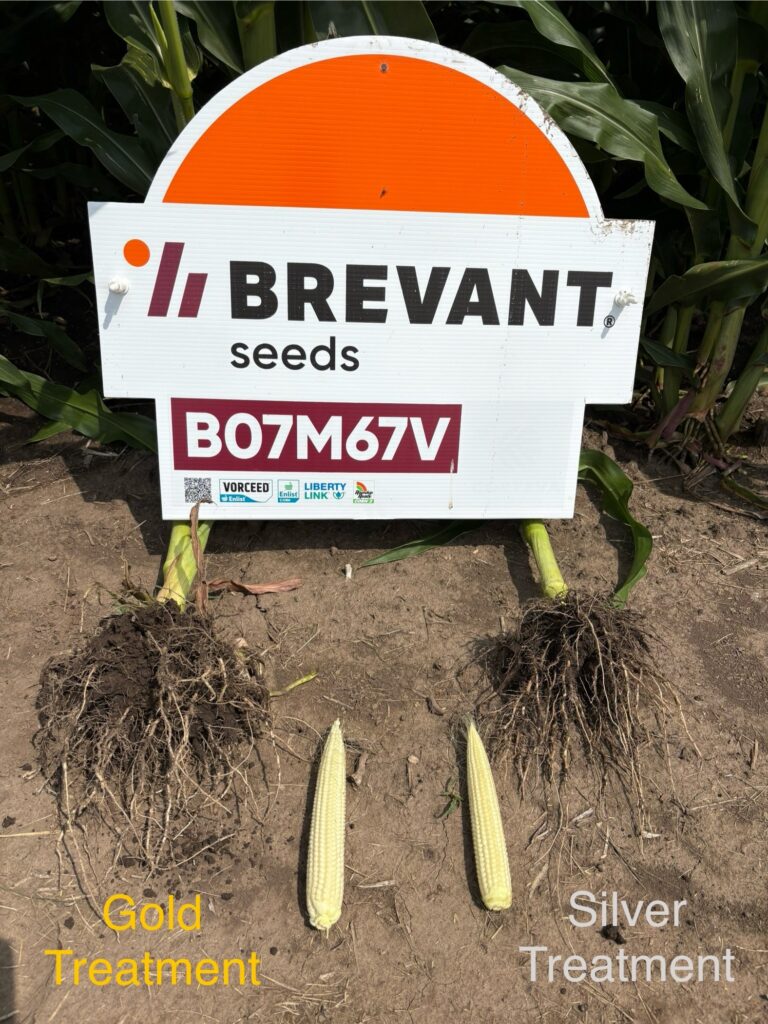
→ Has a very robust root structure
→ Features an attractive plant stature with a medium-tall height and broad leaves that contributes to an impressive field appearance.
→ Overall good disease package moving West to East in Ag Partners territory
→ Will shine in higher yield environments, as seen in the picture above.
If you are planting corn in that 105–110 day range, I would give this hybrid a try! If Vorceed is not needed, look to B07G52PCE on that rotated acre as well. These hybrids would be a great replacement for B06Y18V/PCE. – Tanner
MINNESOTA – WEST
Belle Plaine – Le Center – Le Sueur – Morristown – Traverse
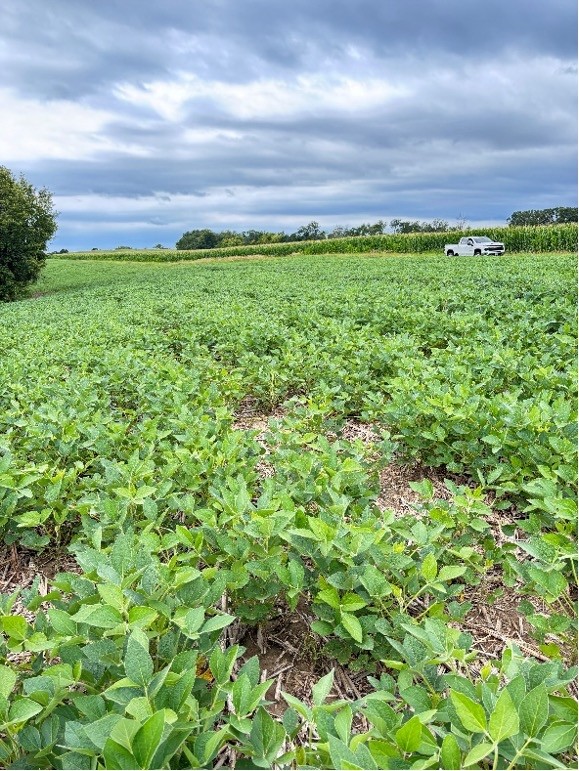
With corn fungicide applications beginning to wrap up in our area, the focus has shifted to soybean fungicide applications. As we’re scouting for insect pressure, disease pressure, and staging, here’s some product reminders and some things to keep in mind.
Endigo ZCX: Soybean aphids have started popping up in our geography over the last few weeks. When out scouting, aphids will typically target the bottom side of the newest leaves of the plant first, and populations can double every 2 to 7 days depending on environmental conditions. The addition of products like Endigo ZCX with Miravis Neo fungicide have shown great results in providing residual and contact control on soybean pests such as aphids, Japanese beetles, stink bugs, and others.
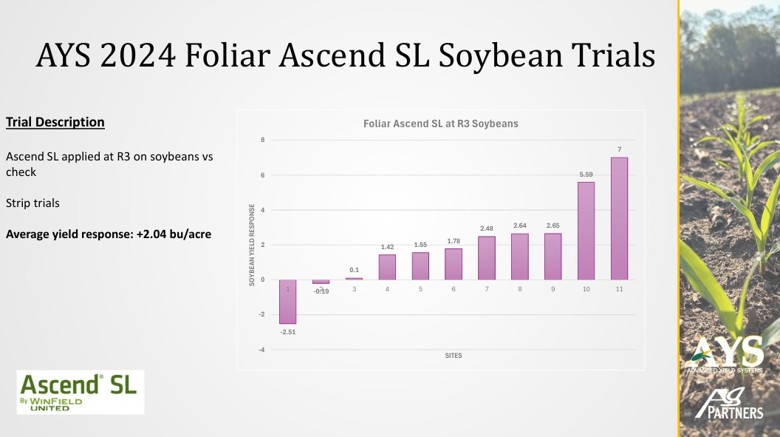
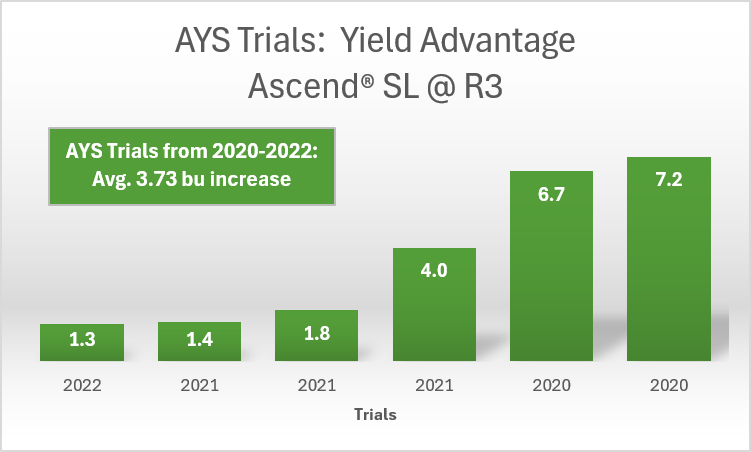
Ascend SL: Pod retention through the later part of the summer and into the fall is crucial to maintaining and increasing our soybean yields. Ascend SL promotes an increase in cell division and leaf expansion through the reproductive phases and has proven to reduce pod abortion when facing stress. 2024 AYS strip trials showed a 2.04 bu/acre yield response when added to the application. – Sully
MINNESOTA – EAST
Goodhue – Kenyon – Lake City – Pine Island – Wanamingo
The cooler weather this week has been a nice break from the heat! As we move into late July, soybeans are reaching the R2–R3 growth stages, which is the ideal timing for a fungicide application. Miravis Neo has been our go-to fungicide in both corn and soybeans over the past several years. In our AYS trials last season, soybeans treated with Miravis Neo at the R3 timing averaged a 5.51 bushel-per-acre yield advantage.
With the hot, dry conditions we’ve had recently, we’re also starting to see a little more insect pressure in soybean fields. Spider mites and soybean aphids are the two main pests we’re keeping an eye on in our area. If you’re planning a fungicide application, adding an insecticide like Endigo ZCX or Tundra to the tank mix could help take care of those insects and save you from making another trip across the field later on.
If you have any questions about your soybean crop or want to talk through the best options for your fields, give your local Ag Partners agronomist a call! – Ethan
MINNESOTA – SOUTH
Elgin – Lewiston – Stewartville
Late-Season Crop Outlook: Protecting Yield Potential and Finishing Strong
Many corn acres have already received fungicide applications. Although disease pressure remains low, recent humidity has created favorable conditions for disease development. Applying fungicide proactively helps protect plant health and preserve the strong yield potential seen across the region.
Recent tissue tests from well-fertilized corn fields show excellent uptake of nitrogen, phosphorus, and potassium, with levels generally stronger than recent years. However, zinc and boron continue to test near responsive or deficiency levels. For growers using products such as Max In Ultra ZMB Plus, the approach remains justified. These micronutrients support nutrient movement, sugar transport, and reproductive growth. With warmer weather potentially accelerating maturity and shortening grain fill, adequate zinc and boron may help maximize nutrient flow to the ear and support kernel development.
Additional products being evaluated in field trials are also showing potential to improve nutrient translocation and kernel retention. With favorable yield conditions, their performance at harvest will be closely watched.
Soybeans Enter Critical Reproductive Stages
Soybean conditions remain positive, with healthy growth and generally adequate nutrient levels. As crops advance through reproductive stages, maintaining micronutrient programs remains important.
Most fields are at or nearing R3, and fungicide applications are expected over the next one to two weeks. This timing also allows growers to include products aimed at increasing yield potential.
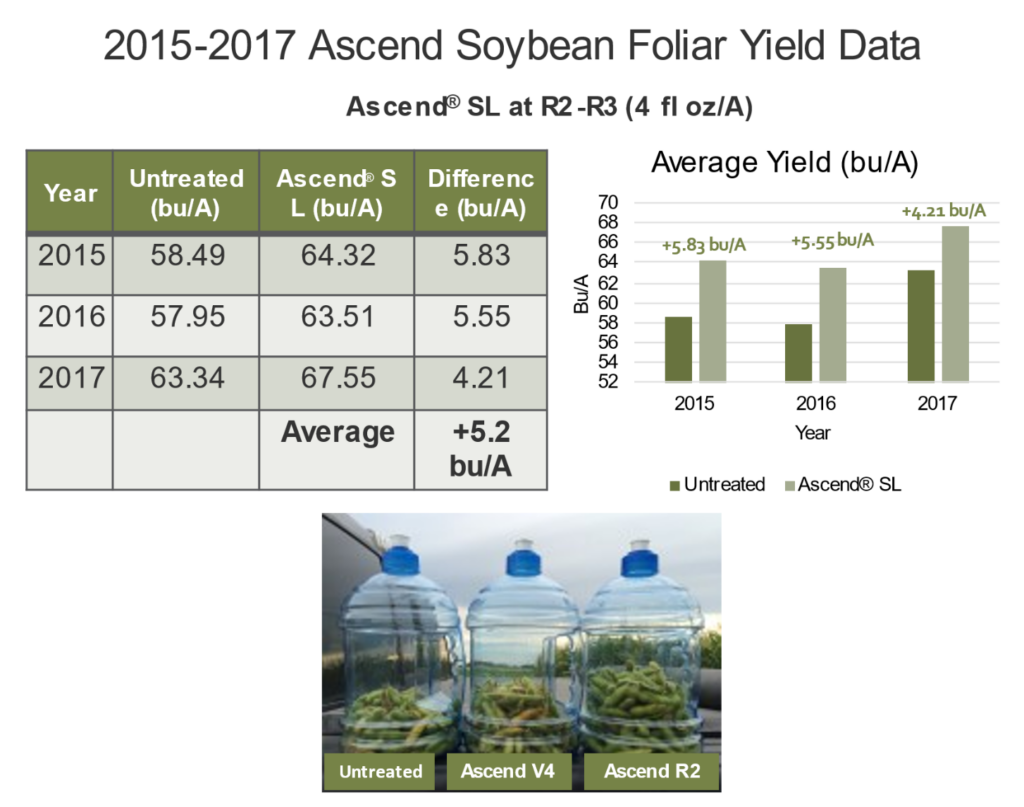
Ascend SL, a foliar plant growth regulator, has demonstrated consistent performance in testing. Applied during reproductive stages, it can increase leaf area, improve photosynthetic capacity, and support pod fill. Answer Plot research has also shown improvements in pod retention, contributing to greater seed fill and higher yield potential.
Finishing the Season Strong
Significant work has already gone into protecting corn and soybean yield potential. With disease management largely complete, the focus now shifts to maximizing late-season performance through micronutrients, growth regulators, and other yield-enhancing tools.
The crop is positioned for a strong finish, and management decisions made over the next several weeks will be critical in turning this season’s potential into strong harvest results. – Joel
WESTERN WISCONSIN
Durand – Ellsworth – New Richmond – Osseo
As we continue through July, we are catching a break from the heat and trading it in for some much-needed rain, as both corn and soybeans continue into their reproductive stages. With the majority of July being very humid and the recent rain on top of that, scouting fields remains a priority in order to evaluate and manage potential disease pressure. Paying close attention to crop health now can help protect yield potential during grain fill and pod development.
While walking fields, take the opportunity to evaluate stand establishment as well. Areas with uneven emergence, inconsistent spacing, or skips and doubles are often easier to spot at this time of year. Mid-season scouting provides valuable insight into planter performance, seed placement accuracy, and emergence uniformity. In many ways, your crop is offering a mid-season report card on how your planting operation performed this spring. Identifying those strengths and weaknesses now can help guide adjustments as you look ahead to next year’s crop. – Kayleen